

Relevant topics of tax disputes presented at an international practical scientific conference
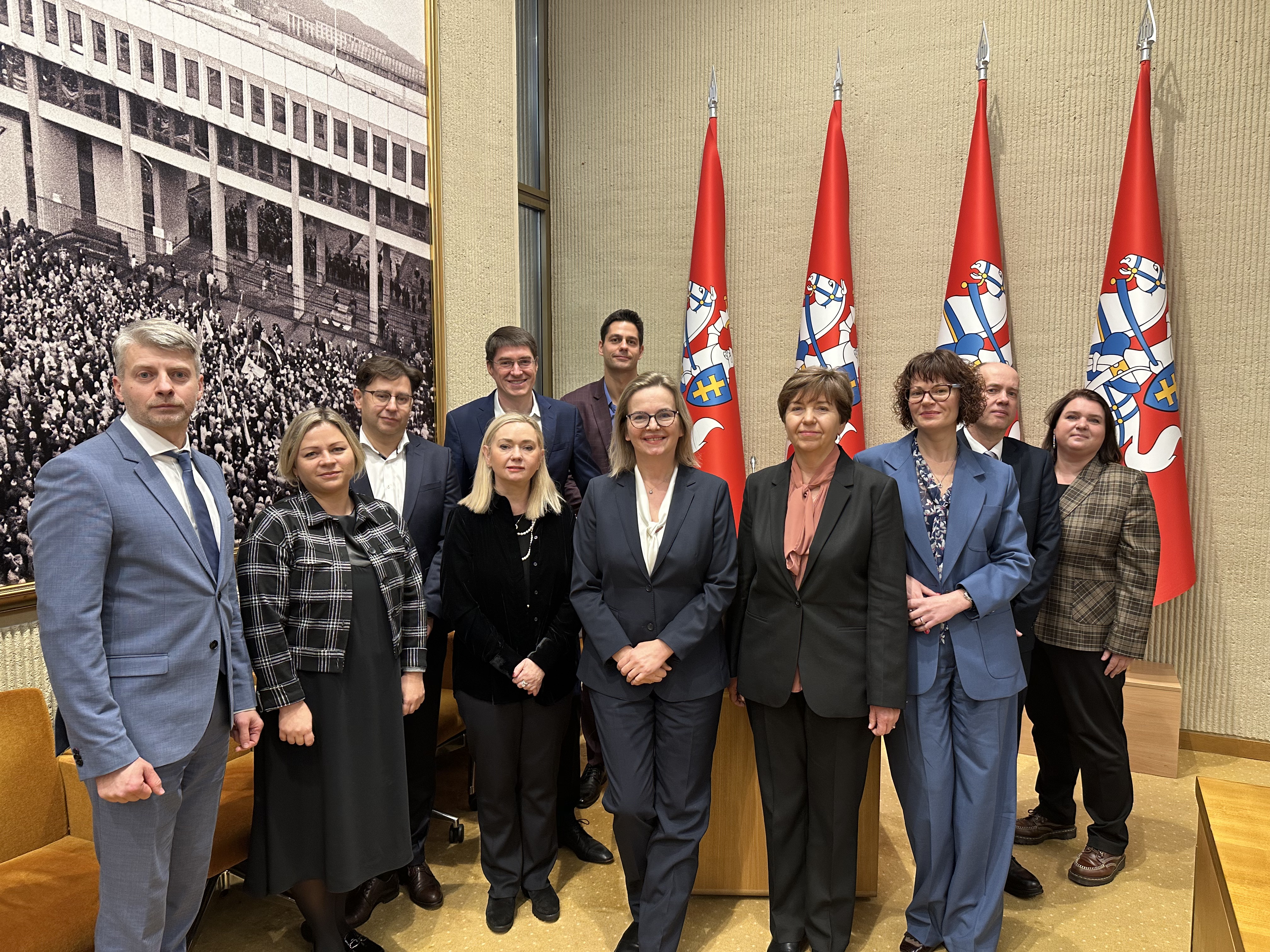
Last week, the Seimas of the Republic of Lithuania hosted the fourth consecutive international practical scientific conference organized by the Tax Disputes Commission, entitled "Taxes and Disputes: Where Can We Improve?" The conference presented the most relevant and significant topics related to tax disputes. Tax practitioners, scientists, judges, economists, professors, lawyers, and other professionals in this field gave presentations and shared their experiences and insights.
The conference was opened with welcoming remarks by Algirdas Sysas, Chairman of the Budget and Finance Committee, Julius Sabatauskas, Chairman of the Law and Justice Committee, Prof. Dr. Haroldas Šinkūnas, Dean of the Faculty of Law at Vilnius University, Chair of the Supreme Administrative Court of Lithuania Prof. Dr. Skirgailė Žalimienė, Deputy Minister of Finance of the Republic of Lithuania Darius Sedeckas, and Deputy Minister of Justice of the Republic of Lithuania Barbara Aliaševičienė.
The conference analyzed various topics related to taxation and finance: the concept of tax disputes, the role of courts in adjudicating disputes, pre-trial dispute resolution processes, the application of the 0% VAT rate, the specifics of the application of EU customs legislation, the application of thin capitalization rules, the intersection of tax and criminal law, and other important issues.
This year, the conference was attended by guests from the Irish Tax Appeals Board, whose chairperson shared her country's experience – the challenges they face and the progress they have made since 2020.
The conference was moderated by attorney Dr. Mindaugas Lukas and Vilnius University assistant professor Dr. Povilas Gruodis.
"The discussions at this conference are not only about current issues, but also about where we can move forward, what problems we see, and what we can change to bring more clarity to both taxation and tax disputes. I encourage you to argue and defend your rights, because disputes bring certainty and clarity," said Vilma Vildžiūnaitė, Chair of the Tax Disputes Commission.
Those who did not have the opportunity to watch the conference live are invited to do so at any time:
Conference recording in Lithuanian:
https://www.youtube.com/watch?v=B1sm0n7k87E
Conference recording in English:
https://www.youtube.com/watch?v=XGGhvXzLcB8
We believe that the thoughts and ideas expressed by the speakers will continue to be explored in order to achieve greater clarity and certainty in both taxation and tax disputes.
Speakers' theses:
Marie-Claire Maney. Changes in the Tax Appeals Commission: progress and challenges since 2020.
- The main challenges faced by the Irish Tax Appeals Commission in 2020: an unclear and inefficient case management system, a lack of human resources, an inconvenient paper-based documentation system, a lack of IT solutions, and the absence of a user-friendly website.
- The Irish addressed these problems from three perspectives: 1. Systemic 2. Structural 3. Emotional:
Systemic perspective – The Irish Tax Appeals Board focused on implementing/upgrading IT systems and changing the format of decisions. Following the changes, around 80% of complaints are received via a form on the website. Actions are now regulated in terms of time.
Structural perspective – the structure of the institution was changed, divided into groups/departments according to the complexity of cases and the amount of money involved.
Emotional perspective – all these changes had a positive impact not only on the microclimate within the organization, but also on the public's attitude towards the board and its work.
- In summary, it can be said that since 2020, the Irish Tax Appeals Commission has not only made technological advances in its systems, but has also restructured the organization's activities. All this has enabled them to resolve cases more efficiently and with higher quality, and to reduce the time taken to reach a decision.
Veslava Ruskan. The concept of tax disputes in the established and evolving practice of the Supreme Administrative Court of Lithuania.
- In practice, disputes arise as to what does not fall under tax disputes, i.e., what is any action or inaction of a tax administrator (its official) that can be appealed by a taxpayer.
- In court practice, "any" action of a tax administrator is interpreted systematically with the Law on Administrative Proceedings (ABTĮ), which can be considered the subject of an administrative case.
- The question arises as to why the MAĮ strictly (in this case only) establishes the appeal procedure under Article 1041 of the MAĮ, and Article 1041 of the MAĮ is assigned to non-tax disputes, even though the issue is essentially a tax one.
- The law does not establish mandatory procedural joinder in tax cases (mandatory participation of several taxpayers in a single tax case), but the tax administrator, when assessing the same legal relationships (as is usually the case with taxpayers who are spouses), cannot make different decisions insofar as they relate to the same taxable actions.
- Some of the important tax regulations must be based on the law, not on comments on the tax law or explanations by the tax administrator.
Prof. Dr. Gediminas Užubalis.The role of the court in examining tax disputes.
- The proportion of tax disputes in administrative court proceedings has been declining in recent years, but their examination remains significant due to specific legal challenges.
- The court acts as an independent authority, whose process is more formalized, and disputes that reach the court have already been refined at the pre-trial stage.
- Although courts are not as specialized as pre-trial institutions, they compensate for this with a broader application of general legal principles, ranging from the stability of declarations to the protection of privacy and the individualization of punishment principles.
- Administrative courts have a duty to actively investigate the facts, as the public interest requires that decisions be based on a comprehensive factual investigation.
- The court's activity differs from activism – activity is necessary for establishing facts, while activism occurs when the court questions legal norms or refers to higher courts for interpretation.
- The court usually assesses whether the tax administrator has properly collected and evaluated the evidence, but in exceptional cases, additional data may be collected if this does not violate the legitimate expectations of the parties.
- Deficiencies in evidence may be remedied in court only if they do not create an unexpected ("surprise") situation for the taxpayer and are related to the factual circumstances already indicated.
- In tax dispute proceedings, it is necessary to ensure a balance between the court's activity and impartiality in order to achieve the objective of resolving the dispute over the violated right on its merits.
Gvida Ivanauskienė. Anatomy of a tax dispute: parallels between regulation and interpretation.
Tax disputes should cover all disputes related to the calculation, declaration, fulfillment, and enforcement of tax obligations, i.e., all disputes arising from the performance of tax administration functions.
This would make the dispute process clearer and simpler, eliminating the need to refer to two separate pre-trial dispute resolution bodies when both the administrative action and the calculation of the tax liability are being challenged.
- The Tax Disputes Commission could also examine disputes arising from:
- decisions on mandatory tariff and/or origin information in the administration of customs duties;
- binding decisions (where the tax administrator disagrees or agrees in part);
- disputes relating to loss reduction, acquisition or loss of tax status, etc.
- There is a need to regulate the dispute process in more detail, establishing the rights and obligations of the parties to the dispute, detailing the procedure for examining and resolving disputes, defining the deadlines for filing and examining complaints in accordance with the rule of setting a month rather than days, setting a one-month deadline for filing a complaint (instead of 20 days), providing for the right of the Tax Disputes Commission to apply to the Supreme Administrative Court of Lithuania with a request to examine whether a normative administrative act complies with the laws or provisions of legal acts adopted by the Government, etc.
Prof. Dr. Eglė Bilevičiūtė. Prospects for the examination of pre-trial disputes in Lithuania and problematic aspects.
- The examination of pre-trial administrative disputes in Lithuania is constantly changing, and the changes in recent years are particularly reflected in the scope of activities of the LAGK and MGK and the structure of the decisions taken.
- The increasing number and variety of complaints encourages the search for more effective procedural measures, including the use of mediation, which is becoming a real alternative to traditional dispute resolution in the Commission.
- Several significant changes have emerged since 2020: mandatory examination of complaints against ANTA, amendments to Article 20 of the ABTĮ regarding the mutual independence of VAS, and the possibility of appointing experts in cases concerning decisions of the Agency for the Protection of the Rights of Persons with Disabilities.
- The dispute resolution process is becoming increasingly digitized—from the filing of a complaint to the sending of decisions, everything can be done remotely, and this practice is shaped by so-called "quasi e-cases."
- Disputes in which the decisions of the Tax Administrator are appealed should be examined by the MGK.
- The proposed changes reveal a targeted move towards a more effective, structured, and modernized pre-trial examination of administrative disputes.
- In order to achieve stability and clarity, it is necessary to further improve the legal regulation that would ensure the consistent and uniform functioning of the MGK and LAGK institutions. Regulation of pre-trial tax disputes at the legislative level is necessary. The direction of development is clear: greater transparency, flexibility, and procedural efficiency in the public administration dispute system.
Dr. Martynas Endrijaitis.Have you exported goods abroad? The problem of applying a 0% VAT rate.
In cases where:
- the right to dispose of the goods was transferred to the purchasers (or persons acting on their behalf) in the seller's warehouse, with the goods being loaded onto vehicles provided by the purchasers themselves;
- the purchasers were responsible for transporting the goods to another Member State;
- the goods were not transported.
When deciding on the Lithuanian seller's obligation to pay VAT to the state budget for the disputed supplies, the tax administrator had to assess the seller's good faith, i.e., whether it knew or, being attentive and careful, could have known about the purchasers' VAT fraud (participation in a transaction involving fraud).
If the supplier of the goods, i.e., the Lithuanian company, is responsible for the dispatch or removal of the goods to another Member State, then there is no need to assess its good faith.
The Supreme Administrative Court of Lithuania explained that in such a case, if the fact of the dispatch or removal of goods to another Member State is refuted (by refuting the evidence submitted by the taxable person for this purpose), the supplier's good faith is not relevant when deciding on its obligation to pay VAT on these supplies to the state budget.
Indrė Ščeponienė. Controversial but insured: can the risk of tax disputes be managed?
- In order to ensure transparent, consistent, and clear application of tax rules, it is necessary to encourage tax disputes and their active examination. Various measures can contribute to this goal, such as the inclusion of binding decisions of the State Tax Inspectorate in the sample of tax disputes, as well as innovations such as the application of tax insurance.
- Tax risk insurance is a new instrument that allows taxpayers to defend their position with confidence, as the financial risk in the event of a tax dispute is transferred to the insurer. The insurance covers not only potential taxes, interest, and fines, but also legal defense costs, thus reducing the pressure to "come to terms" with the situation or pragmatically resolve it through an agreement, losing the opportunity to form a legal interpretation on a specific issue. Such protection is particularly relevant in complex tax situations where there are contentious issues due to a lack of practice or the tax administrator's desire to obscure it.
Dr. Gediminas Valantiejus. Challenges of uniform application of EU customs legislation in tax disputes: what the practice of the Baltic States shows.
The report analyzes the practice of the Baltic States (i.e., the Republics of Estonia, Latvia, and Lithuania as EU Member States) based on the practice of the Court of Justice of the European Union (CJEU) in cases related to EU customs law issues.
Problems remaining after 2020:
- the absence of conflict-of-law rules governing the application of different sources of law (international and EU) in the process of tariff classification of goods and the resolution of conflicts between them;
- the absence of a procedure for applying EU customs law interpretation methods in the field of tariff classification and/or ambiguities in this procedure;;
- the lack of procedural guarantees for importers in customs valuation processes.
Dr. Andrius Paulauskas. Will the STI succeed in changing the practice of the Supreme Administrative Court of Lithuania regarding the application of thin capitalization rules?
- There is no consistent position of the STI on the application of thin capitalization rules;
- The practice of the Supreme Administrative Court of Lithuania requires the establishment of abuse in order to apply thin capitalization rules; the practice has not changed and is in line with the latest practice of the European Court of Justice;
- The conflict between the Anti-Tax Avoidance Directive and national rules has not been resolved;
- In practice, the STI requires the impossible, namely to prove that an identical loan would have been granted to the taxpayer by an unrelated person.
Dainius Daugirda. The tax dispute is ending. A lawsuit against the company's director. What next?
- The civil liability of a director after a tax dispute is not automatic. A tax dispute resolves the relationship with the state regarding tax, while civil liability resolves the relationship with a specific creditor. These processes have different objectives and different standards of proof, so mechanically combining them would be unlawful and illogical.
- The decision of the State Tax Inspectorate carries significant weight, but is not automatic proof. The facts presented in it are not prejudicial, so the civil court evaluates them independently.
- In VAT disputes, the diligence of the manager is examined. Questions that should be asked: Could the manager have known about the contractor's violations? Did he have a real opportunity to control the chain?
- In cases of VAT triangular trade, it is unclear who the creditor is. The damage may be incurred by the budget of another EU country rather than Lithuania, so it is unclear who has the right to make a claim.
- The burden of proof differs in civil and tax proceedings. Tax disputes involve decisions on VAT calculation and good faith, while civil proceedings require proof of specific damage to a specific creditor.
- Cases of VAT triangular trade show that the issue of damage in the EU context is much more complex than it seems. When the movement of goods crosses several countries, damage may be caused to the budget of another country, making the concept of a Lithuanian creditor unstable. This directly limits the possibility of bringing civil claims against the manager.
- The manager's responsibility must be assessed according to his actual ability to control the supply chain, rather than abstract expectations. If the manager acts with due care, checks contractors, and responds to risks, he cannot be held responsible for a VAT "hole" caused by the actions of other entities.
- The interests of the tax administrator and the creditor are not identical, so their standards of proof cannot be harmonized either. If this were not the case, any defeat of the State Tax Inspectorate would automatically result in civil claims against managers, which would be a parody rather than a legal system.
- In the future, the biggest questions will revolve around the doctrine of good faith, the balance of proof, and the identification of creditors. These three areas will continue to pose problems for both the tax administrator and company managers.
Jurgita Narkevičiūtė. The intersection of legal branches: practical problems in tax and criminal proceedings.
- Lithuania needs more consistent and intensive inter-institutional cooperation in the areas of tax disputes and criminal law. Today, there is still a lack of broader legal analysis and uniform legal practice. Tax dispute practice shows that institutions do not have a uniform approach to the same problems.
- The means of redress chosen by the tax administrator must be lawful, proportionate, and not contrary to the law. The administrator has a duty to ensure the proper application of the principles of res judicata and non bis in idem (a matter that has been finally decided by a court, i.e., the prohibition of bringing the same action twice; it is not possible to punish the same violation of the law twice) are properly applied. The principle of ultima ratio (criminal liability is a measure of last resort) must remain as a fundamental guarantee of the justice process.
- It is often the case that in tax disputes and criminal cases, when assessing the same facts and evidence, liability is imposed on different entities. Such situations cause legal uncertainty.
- In smuggling cases, civil claims are not filed in a timely manner, and after convictions are handed down, the prosecutor's office proposes to initiate administrative proceedings. In rare cases where a civil claim is nevertheless filed, it is usually dismissed and referred for examination in civil proceedings. Subsequently, the claim also remains unexamined in civil proceedings because it is referred for examination in accordance with the procedure established by the MAĮ. In such cases, the principle of legal proportionality and procedural consistency is not ensured.
- There remain fundamental differences between criminal and tax proceedings in terms of the standards for gathering and evaluating evidence, which means that the same data can lead to different decisions. It is necessary to avoid situations where, when investigating the same factual circumstances, radically different conclusions are formulated in the expert opinion submitted during the pre-trial investigation and in the tax audit report, i.e., in documents of equal probative value.
Last updated: 18-05-2026
Related news:
Errors in Income Reporting: What Tax Disputes Reveal